

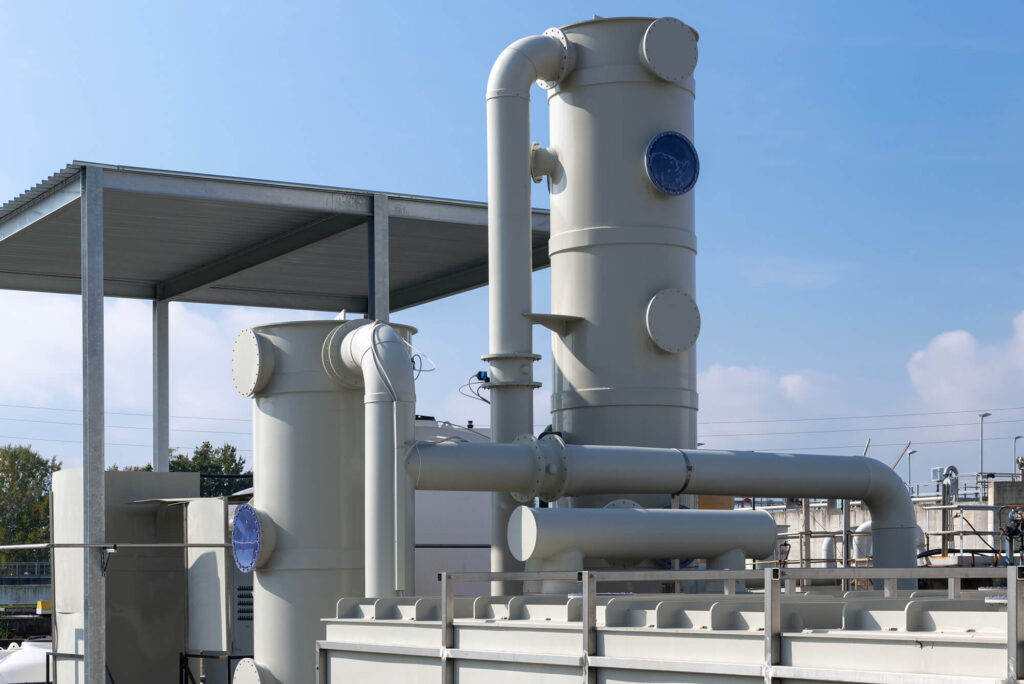
CASE STUDY: Ammonia removal from digestate at Biogas Plants
AMMONIA STRIPPING
Treating digestate from anaerobic digestion at biogas plants is a critical challenge for both industrial and agricultural sectors. To comply with regulatory limits on the amount of nitrogen that can be spread per hectare on agricultural land, ammoniacal nitrogen concentration must be drastically reduced before land application.
This is a delicate process requiring high-level plant engineering expertise to treat complex liquid streams without compromising plant uptime. BMB Purification designed and installed a high-efficiency solution based on stripping and scrubbing columns for two companies in Piedmont, Italy.

CLIENT’S NEED
Reduce ammoniacal nitrogen in the digestate from two biogas plants (each with approximately 2 MW of electrical output) to enable compliant agronomic land application and eliminate waste disposal costs.

TECHNOLOGY USED
Integrated system with an ammonia stripping column and a scrubber tower for conversion into ammonium sulfate.

RESULTS
– Ammoniacal nitrogen reduction in digestate: compliant with agronomic spreading limits
– Ammonia-to-ammonium sulfate conversion: 100% (zero atmospheric emissions)
– Digestate transformed into a reusable byproduct/fertilizer

KEY STRENGTHS
– Regulatory compliance for field application
– Zero waste disposal costs
– Circular economy through ammonium sulfate recovery
that others don’t know how to treat.
AMONG OUR CLIENTS



















AMMONIA STRIPPING FROM DIGESTATE: how it works
At biogas plants generating energy through anaerobic digestion, digestate management is a critical issue both operationally and economically.
Although depleted of degradable organic matter, this liquid effluent retains a high concentration of ammoniacal nitrogen (NH₃). Environmental regulations and the Nitrates Directive impose strict limits on the maximum amount of nitrogen that can be spread per hectare on agricultural land, often turning excess digestate into a costly waste stream requiring disposal.
For this reason, ammonia stripping from digestate – followed by chemical recovery as ammonium sulfate – has become a primary necessity for biogas plants, ensuring environmental sustainability, circular economy practices, and operational continuity.

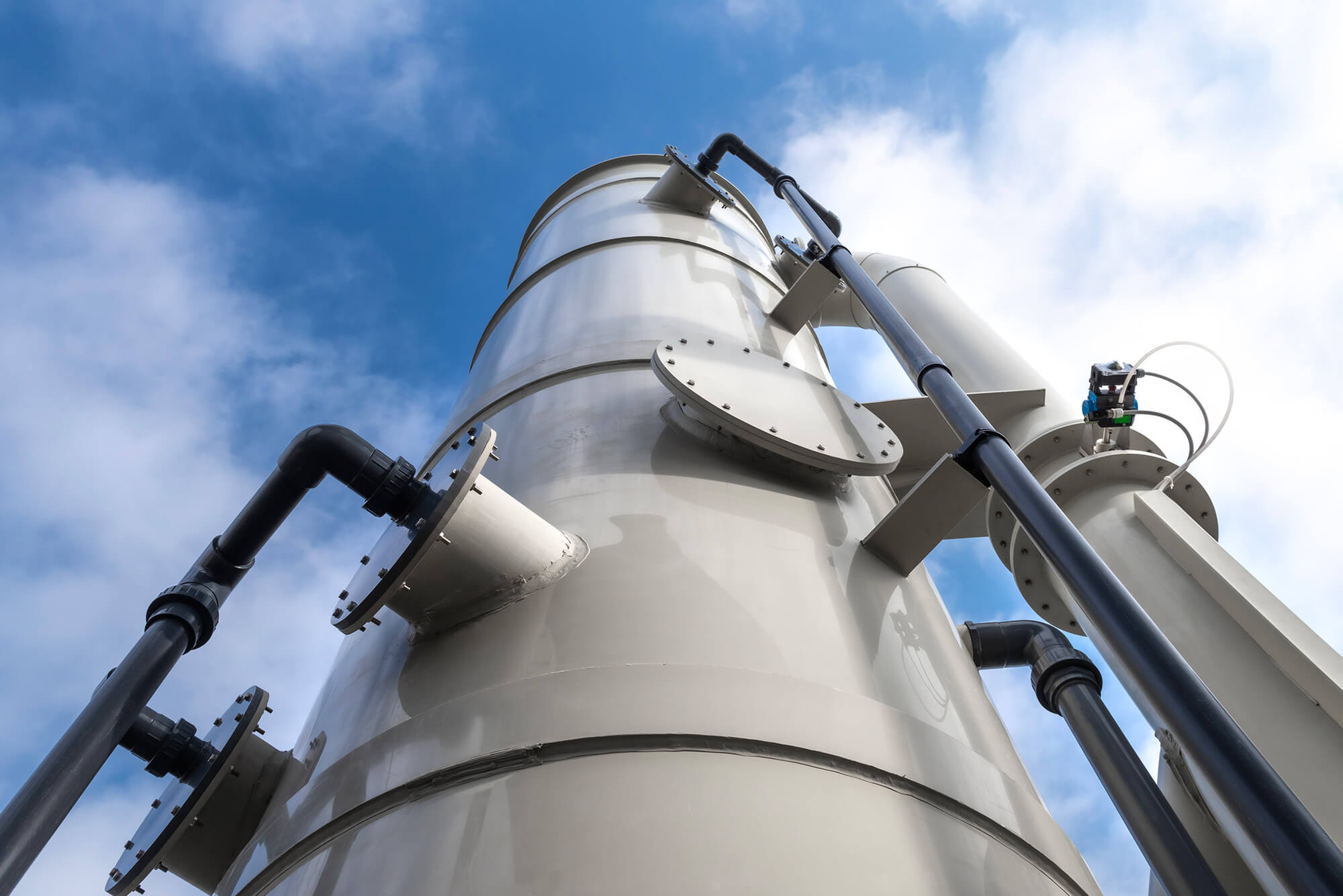
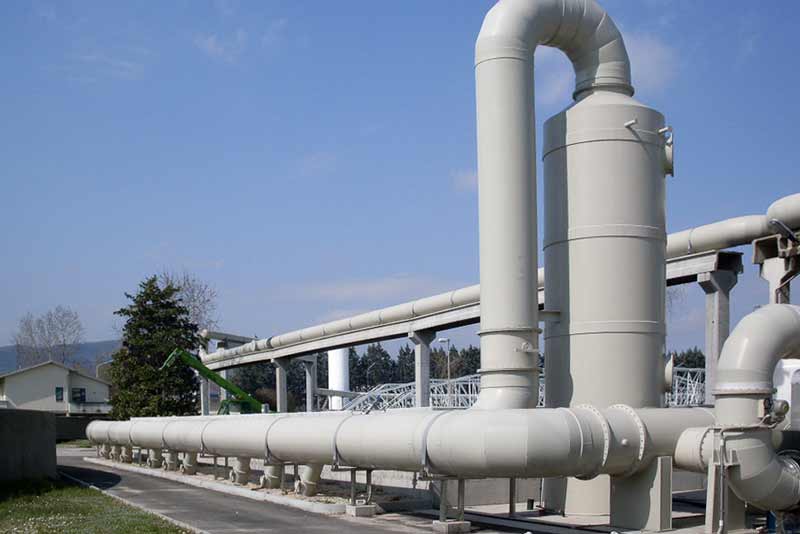
AMMONIA STRIPPING AND RECOVERY SYSTEM FROM DIGESTATE FOR BIOGAS PLANTS

CHALLENGES
HOW TO REMOVE AMMONIA FROM DIGESTATE
Integrating an ammonia stripping system into existing biogas plants posed complex engineering challenges, starting with the need to treat a high-nitrogen-load liquid/sludge stream without causing clogging in the columns. Another key challenge was meeting stringent environmental regulations on agronomic land application and achieving zero atmospheric emissions, while ensuring continuous 24/7 plant operation with minimal running costs.
SOLUTION
STRIPPING COLUMNS AND CHEMICAL SCRUBBERS FOR BIOGAS PLANTS
The integrated on-site system feeds the effluent into a high-efficiency stripping column, which extracts excess ammonia from the liquid phase and transfers it into the air stream. The ammonia-laden air is then routed to a second column (wet chemical scrubber), where it is washed with an acidic solution that neutralizes the ammonia and converts it into liquid ammonium sulfate. As a result, the treated digestate becomes suitable for land application, and the ammonia is fully recovered as a high-grade fertilizer.
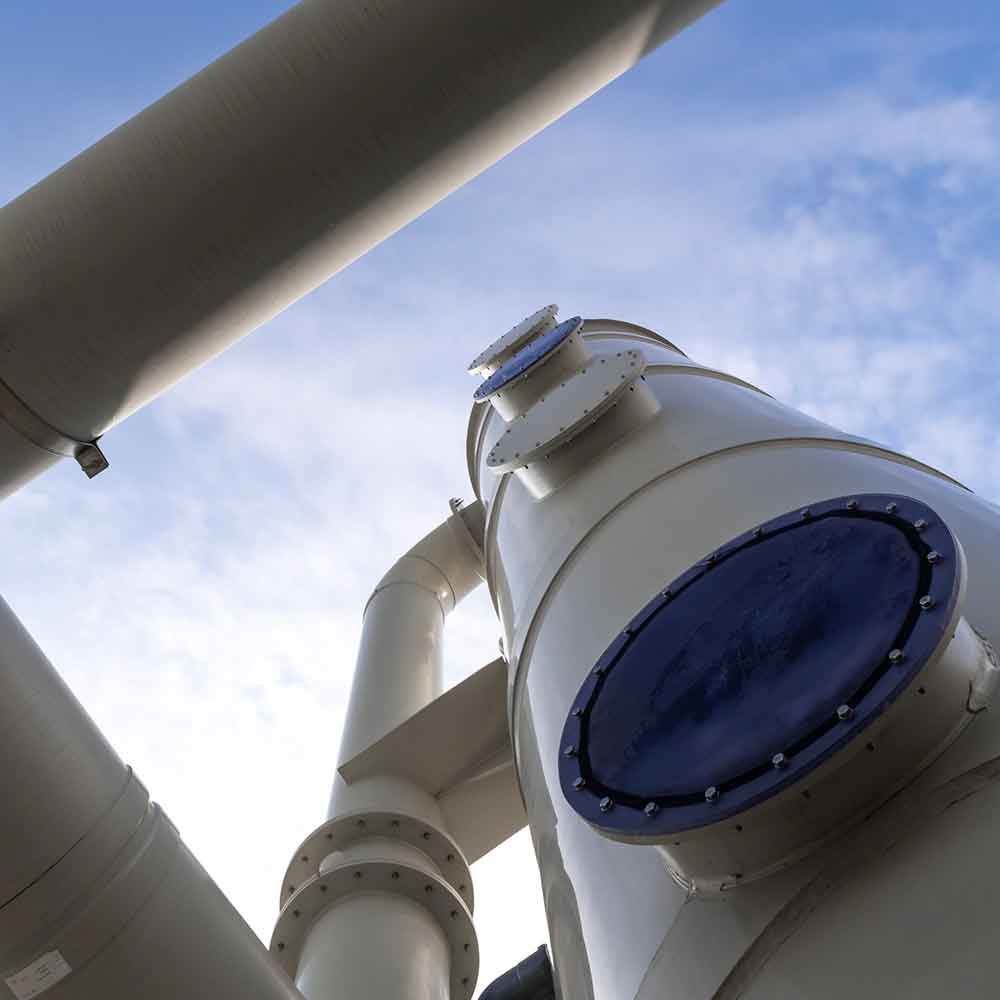
TURNKEY PLANTS
Each industrial wastewater purification plant realized by BMB is custom designed after thorough field study. The initial study of condition, context and potential problems allows or technicians to propose targeted and tailored industrial wastewater purification plants, appointed plants and specific technologies for any kind of problem.
Find out also our industrial odour treatment.

MANUFACTORING AND INSTALLATION
Each plant produced by BMB is designed, built and tested in-house. The installation is planned and carried out by our specialized technicians.

MAINTENANCE ASSISTANCE
BMB offers complete and custom service for plant assistence and maintenance: oordinary maintenance, extraordinary availability and remote monitoring.
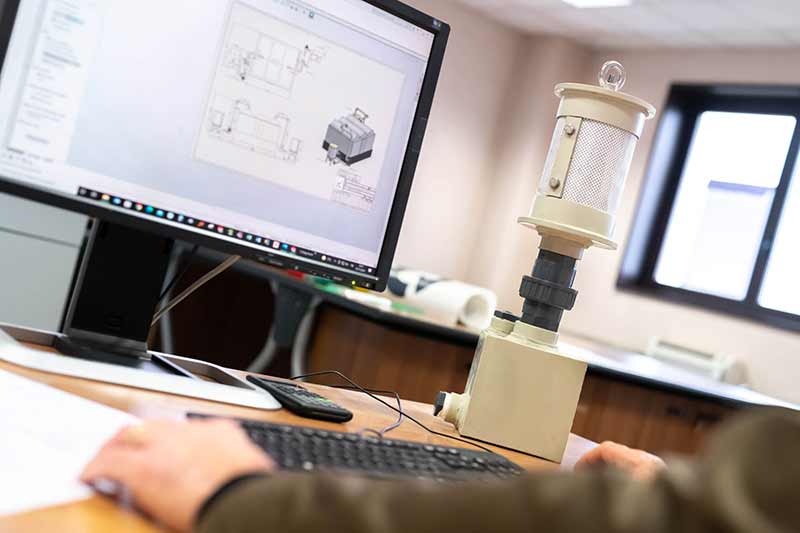
PLANT DESIGN
Our plants are designed in compliance with the most updated law and engineering standars, are applied to needs of client so as optimize the investment.
FAQs about ammonia removal from digestate at Biogas Plants
Why do biogas plants need a stripping column for digestate treatment?
Although low in degradable organic matter, digestate contains high concentrations of ammoniacal nitrogen. Since regulations limit the amount of nitrogen that can be spread per hectare on agricultural land, stripping is essential to remove excess ammonia and enable agronomic disposal without having to manage the effluent as special waste.
What happens to the ammonia extracted from digestate during stripping?
The ammonia extracted in the stripping column is not released into the environment. It is routed to a second column (chemical scrubber), where it reacts with sulfuric acid and is converted into ammonium sulfate. This compound is a high-value liquid fertilizer that can be reused or sold commercially.

