


CASE STUDY: odour treatment for animal by-products
ODOUR TREATMENT IN ANIMAL BY-PRODUCT PROCESSING
In a food company that processes animal by-products, odours do not come from a single point. The cookers, raw material storage areas, washing area and wastewater treatment plant each produce different emissions, and a single system sized for every source ends up larger than necessary. In this project the emissions were split into two streams, each with the treatment suited to it.

CLIENT’S NEED
Extract and treat the air from several production areas (cookers, raw material storage, washing area) and from the wastewater treatment plant, which had already been covered but was still a source of unpleasant odours, together with the vents of the storage silos and tanks.

TECHNOLOGY EMPLOYED
Extraction network serving the production areas
Two-stage scrubbing tower with acid and alkaline dosing
Enclosed biofilters
Dedicated photocatalytic filters on the silo and tank vents

RESULTS
System completed in 2 months
Scrubber and biofilters sized for the room air only, as the silo and tank vents are treated at source
Operation and maintenance can be monitored remotely over the internet

STRENGTHS
Two separate treatment lines by emission type
A more compact central system
Remote monitoring
that others don’t know how to treat.
AMONG OUR CLIENTS


















ODOUR TREATMENT FOR ANIMAL BY-PRODUCTS: THE CONTEXT
Processing animal by-products generates odorous emissions at several stages. In the production areas the air has to be extracted continuously, while silos and tanks emit through individual vents at lower flow rates. The wastewater treatment plant also contributes: in this case it had already been covered, but the air under the cover still had to be extracted and treated.
Emissions of this kind typically contain nitrogen compounds, such as ammonia and amines, and sulphur compounds, such as hydrogen sulphide. Their chemical properties are opposite, so a single washing stage is not enough to treat them.

THE PLANT BUILT BY BMB PURIFICATION

CHALLENGES
DIFFERENT SOURCES, ONE COMPACT CENTRAL SYSTEM
- Collecting air from areas with different uses and characteristics into a single extraction network.
- Including the already covered wastewater treatment plant in the treatment.
- Treating the silo and tank vents without enlarging the central system.
- Keeping footprint and construction time down.
SOLUTION
TWO TREATMENTS FOR TWO TYPES OF EMISSION
BMB designed the extraction for all the production areas and two separate treatment lines.
Air extracted from the production areas. It is conveyed to a single two-stage scrubbing tower. One stage uses acid dosing and neutralises basic compounds such as ammonia; the other uses alkaline dosing and treats acidic compounds such as hydrogen sulphide. On leaving the tower, the air passes through the enclosed biofilters, where microorganisms oxidise the remaining odorous compounds before emission.
Silo and tank vents. These are treated on site with photocatalytic filters, without connecting them to the extraction network.
Why separate the two streams. Had the silo and tank vents also been connected to the central extraction, the flow rate to be treated would have increased and the scrubber and biofilters would have had to be larger. Treating them at source meant the central system could be sized for the room air alone, taking up less space and shortening construction time.
Remote management. The plant’s operating parameters can be monitored over the internet, so staff and technicians can check the system’s status and plan maintenance without going on site.
Timescale. The project was completed in 2 months.

MANUFACTURING AND INSTALLATION
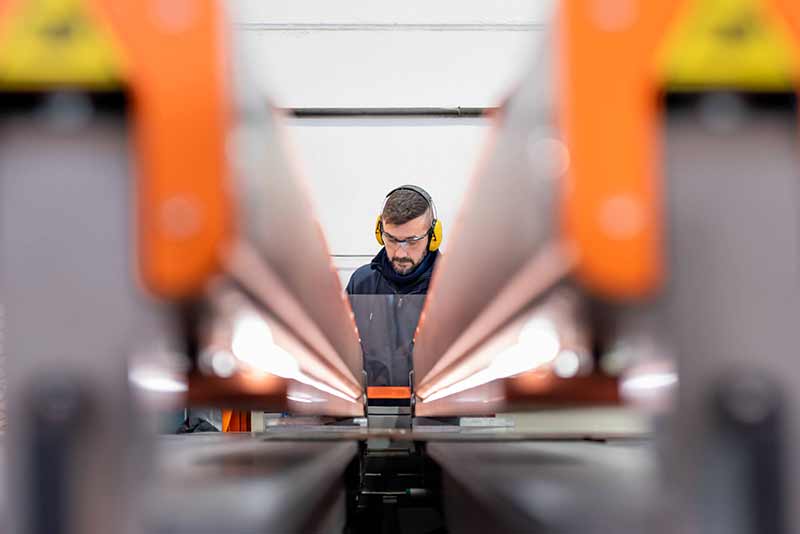
Each plant produced by BMB is designed, built and tested in-house. The installation is planned and carried out by our specialised technicians.

MAINTENANCE ASSISTANCE
BMB offers a complete, customised assistance and maintenance service for its plants: routine maintenance, call-out availability for extraordinary work and remote monitoring.
PLANT DESIGN
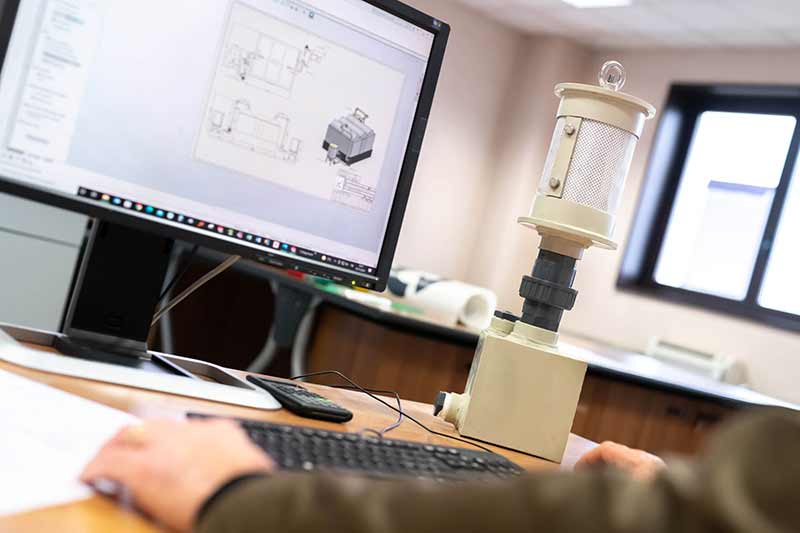
Our plants are designed in compliance with the latest legal and engineering standards and tailored to each client’s needs to optimise the investment.
FAQs: questions and answers
How are odours treated in a plant that processes animal by-products?
Several technologies are usually combined: the air from the production areas is extracted and washed in a scrubbing tower (scrubber), then passes through a biofilter that oxidises the remaining compounds. Point sources, such as silo and tank vents, can be treated separately so that the central system is not oversized.
Why a two-stage scrubber with acid and alkaline dosing?
Because the emissions contain both basic compounds, such as ammonia, and acidic compounds, such as hydrogen sulphide. Each stage uses a reagent solution suited to one of the two groups.
When does it make sense to treat silo and tank vents separately?
When connecting them to the central extraction would increase the flow rate to be treated, and with it the size of the scrubber and biofilters. Treatment at source, for example with photocatalytic filters, keeps the central system more compact.

